On a warm spring day in Concord, usually after rain, a cloud of small winged insects pours out of a stump, a mulch bed, or, worse, a baseboard inside the house. That swarm is a termite colony advertising that it is mature and nearby. It is also the one warning sign most homeowners get before quiet damage adds up, which is why swarm season deserves attention rather than panic.
Waiting is what turns a manageable problem into a structural one. Subterranean termites, the kind that dominate in North Carolina, live in the soil, travel through mud tubes to reach wood, and eat it from the inside out. A colony does not pause while you decide. The cost of neglect here is not a bigger bill in the abstract; it is sill plates, floor joists, and door frames hollowed over seasons while the surface paint still looks fine.
Swarmers are not flying ants
The mix-up is constant, and it matters because the responses differ. A termite swarmer has a straight, thick waist, straight antennae, and two pairs of wings all the same length, which it sheds in piles near windowsills after a short flight. A flying ant has a pinched waist, bent antennae, and front wings clearly longer than the back pair. Ants swarm too, and an ant swarm near a stump is a nuisance. A termite swarm indoors means a colony is feeding on or under your house.
Save a few insects in a sealed jar or a clear photo if you can, and note where they appeared. Swarmers emerging inside, or pouring from a baseboard, are more serious than swarmers in the yard by a fence post, though both deserve an inspection. Do not just vacuum them up and forget it; the swarm ends in a day, but the colony that sent it stays.
Mud tubes and the quiet signs
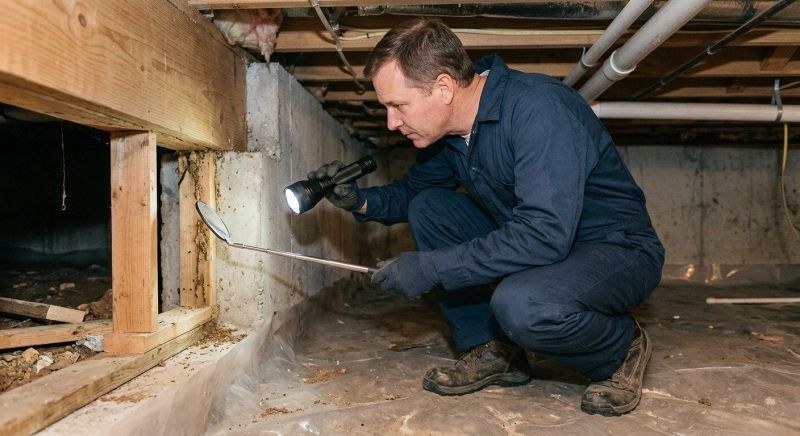
Between swarms, termites leave working signs. A mud tube is a pencil-wide tunnel of soil running up a foundation wall, a crawlspace pier, or inside a garage, built so workers can travel between soil and wood without drying out. Break one open and check back in a few days: a rebuilt tube means active termites. Piles of shed wings, wood that sounds hollow when tapped, paint that bubbles over a tunnel, and doors that suddenly stick in spring all belong on the same list.
An inspection covers the places you rarely look: the crawlspace, the sill plate line, around plumbing entries through the slab or floor, and any place wood touches soil, including deck posts and stacked firewood against the house. In red clay country, soil contact and moisture are the invitations. Fix the leaking outdoor faucet, grade soil away from the foundation, and keep mulch thinner against the wall.
What waiting actually costs the house
Termite damage is slow, then suddenly obvious. Workers eat the soft spring wood inside a board and leave the harder grain, so a joist can look sound and crush under a probe. A season of waiting rarely ruins a house. Years of it, the common pattern when a swarm gets ignored twice, can mean sistered joists, replaced subfloor, and sagging that shows up as cracked drywall far from the source.
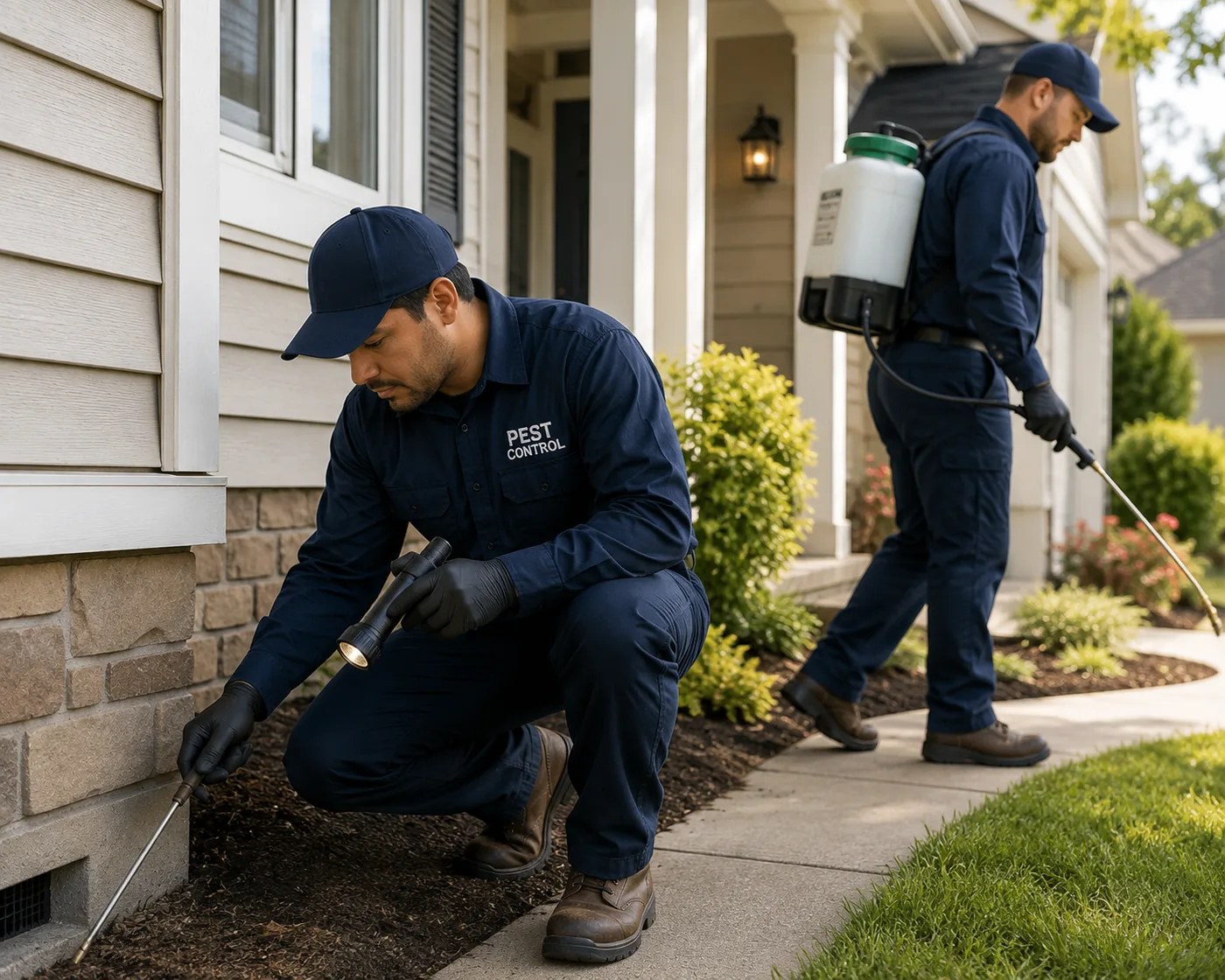
The practical habit is an inspection every year, a quick self-check each spring swarm season, and prompt treatment when activity is confirmed, whether that is a liquid soil treatment, a bait system, or both, chosen for the house and its construction. Concord Pest Control Pros does termite inspection and treatment in Concord, and spring, swarm season itself, is exactly when that call is cheapest in damage terms, because the colony has just told you where it is.
Common questions
When is termite swarm season in North Carolina?
Spring, typically on warm days after rain, is the main swarm season for subterranean termites in the Piedmont. Swarmers indoors at any time of year still warrant an inspection.
I saw swarmers in the yard. Is my house infested?
Not necessarily, since colonies also live in stumps and fence posts, but a yard swarm means a mature colony is close. An inspection of the crawlspace and foundation is the way to know.
What is a mud tube?
A pencil-wide tunnel of soil termites build to travel between the ground and wood without drying out. Tubes on foundation walls or crawlspace piers are a standard sign of active termites.
Photos in this guide are representative stock images.
← All guides from Concord Pest Control Pros← Back to Concord Pest Control Pros